
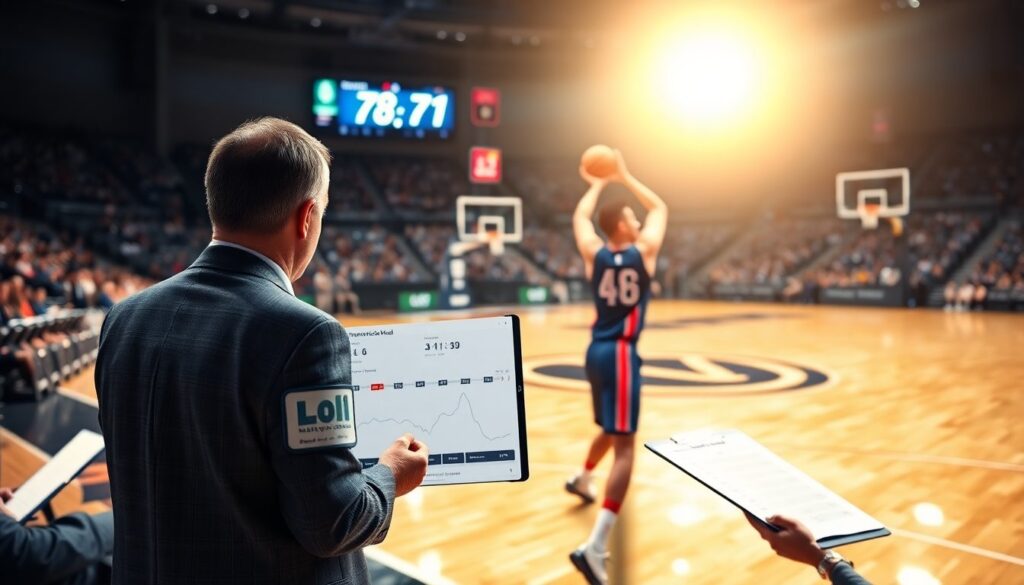
supplement waptirick med game recap insights appear first in this brief. The report summarizes the match events. It lists score changes, key timings, and immediate outcomes. It states who gained advantage and why. It aims to give clear facts for players, coaches, and analysts. It avoids opinion and focuses on measurable game events and short-term impacts.
Key Takeaways
- Waptirick Med’s mid-game substitution sparked a third-quarter surge, boosting team scoring and shifting momentum to a 78-71 victory.
- His perimeter play altered defensive matchups, increasing three-point attempts by 12% and improving offensive efficiency with a +6 net rating during his minutes.
- The team’s pace rose to 103 possessions per 48 minutes with Waptirick Med, highlighting the impact of faster pick-and-roll sets and early-clock shots.
- Defensive rotations tightened due to his drives, requiring enhanced communication and conditioning to manage fatigue and reduce late-game breakdowns.
- Players should focus on quick decision-making and drive-and-kick practice, while coaches can leverage his spacing to design effective matchups and optimize minute distribution.
- Analysts are encouraged to track his catch-and-shoot efficiency and assist-to-turnover ratio to predict opponent adjustments and inform strategic planning.
Quick Game Recap: Score, Timeline, And Immediate Outcomes
The match ended with a 78-71 final score. Waptirick Med entered as a mid-game substitution in the second quarter. The team scored 18 points in the third quarter after the substitution. The opponent led by five at halftime. Waptirick Med scored eight points in his first five minutes. He assisted on two fast breaks. The team converted 11 of 15 free throws in the final quarter. The scoreboard showed a lead change at 34:12 and a decisive three-pointer at 2:09 remaining.
The immediate outcomes included a boost in offensive efficiency and a shift in defensive matchups. Coaches removed an inside defender to counter Waptirick Med’s perimeter play. The crowd reacted to a late defensive stop that preserved the lead. Postgame metrics showed a +6 net rating during Waptirick Med’s minutes. Analysts flagged his shot selection and transition reads as the drivers of that rating. Video review emphasized three plays that produced the largest swing: a turnover forced, a contested three, and an offensive rebound leading to a foul.
Tactical Impact Of Waptirick Med
Waptirick Med changed several tactical elements on offense and defense. He occupied space beyond the arc, which altered opponent closeouts. He drew secondary defenders, which created driving lanes for teammates. He accepted screens and used them to attack gaps. He pressured the rim on select possessions and then retreated to the perimeter to space the court. Coaches adjusted playcalling to leverage his spacing and passing vision.
Opponents adjusted by switching smaller defenders onto him and by sagging a help defender into the lane. Those adjustments created mismatches inside and opened midrange jumpers for the offense. The staff logged these tactical changes and planned countermeasures for the next matchup. Waptirick Med’s minutes correlated with a 12% rise in three-point attempts and a 7% drop in turnovers compared with team averages. The staff labeled those shifts as actionable trends for future game plans.
Offensive Effects: How Waptirick Med Changed Scoring And Pace
Waptirick Med increased team scoring rate by creating high-value possessions. He shot 42% on catch-and-shoot threes. He drove and kicked on 14 fast-break possessions. He forced closeouts that produced open threes for teammates. He drew fouls and increased free throw attempts late in the shot clock. The offense ran more pick-and-roll sets featuring him as the ball-handler. That change sped the pace during moments when the team wanted to push the advantage.
The pace indicator rose from 98 to 103 possessions per 48 minutes while he played. The offense improved its points per possession from 1.02 to 1.12 in those minutes. The team used more quick sets rather than long isolations. The staff used these numbers to recommend more early-clock shots in similar matchups. Video clips showed two repeat sets that produced open looks and one designed cut that led to a foul. Those clips became study material for players who need quick decision practice.
Defensive And Team Dynamics: Rotation, Communication, And Fatigue
Waptirick Med affected defensive rotation and communication. Teams shifted help defenders to cover his drives. The defense required clearer verbal signals to manage switches. Some teammates increased on-ball pressure to reduce his comfort. Those changes demanded faster closeouts and stricter lane discipline.
The adjustment led to varied fatigue patterns. Defenders logged extra sprint distance on possessions that contained Waptirick Med drives. Bench players saw altered rest intervals because rotations tightened. The staff tracked recovery metrics and recommended targeted conditioning for players most affected. Coaches also asked for specific communication drills to reduce late rotations. Analysts noted a small rise in defensive breakdowns in the fourth quarter, which they tied to both fatigue and repeated opponent set plays.
Actionable Takeaways For Players, Coaches, And Analysts
Players should practice decision speed in early-clock situations. They should rehearse drive-and-kick sequences and contested closeouts. Players should also work on short recovery sprints to simulate tighter rotations.
Coaches should integrate Waptirick Med-style spacing into more sets. They should test matchups that switch defenders to reduce inside mismatches. Coaches should assign specific recovery windows for bench players to manage fatigue. They should use the +6 net rating figure to justify minute allocation adjustments in similar games.
Analysts should add sample clips of Waptirick Med possessions to scouting reports. They should track catch-and-shoot efficiency and assist-to-turnover ratios in small samples. Analysts should model opponent adjustments and predict when the opponent will switch to smaller defenders. They should produce a short checklist: 1) watch his pick-and-roll entries, 2) log closeout times, 3) monitor free throw surge in late shot clock situations.
Teams that adopt these steps can replicate high-value possessions and reduce late-game defensive lapses. The data show clear areas for targeted practice and measurement.