
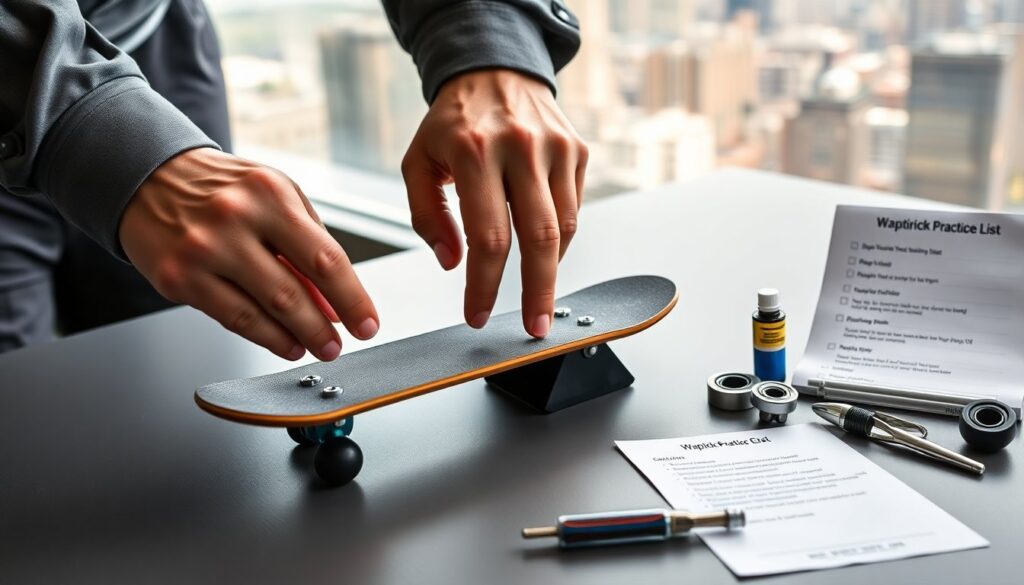
master art waptirick fingerboarding tech deck list sits at the center of many modern fingerboard routines. This guide explains what the Waptirick is, why riders should learn it, and how they should practice it with a Tech Deck. The steps stay simple. Each sentence gives one clear action or fact. Readers will get a direct path to consistent Waptiricks and faster progress.
Key Takeaways
- The Waptirick is a versatile mid-level Tech Deck trick combining flip, rotation, and slide that enhances timing, control, and trick variety.
- Using a Tech Deck with tight trucks, fresh wheels, clean bearings, and slightly grippy tape improves consistency when practicing the Waptirick.
- Step-by-step finger placement and motions—pop with the middle finger and outward flick with the front—are essential to mastering the Waptirick on a Tech Deck.
- Targeted drills focusing on pop, flick, and catch mechanics build muscle memory and smooth execution for faster progression.
- Correct timing between pop and flick, along with adjusting truck tension and finger positioning, fixes common rotation and rollaway mistakes.
- Consistent practice with gradual adjustments, such as slowing reps and using video review, leads to reliable Waptirick performance on a Tech Deck.
Why The Waptirick Should Be In Your Trick Arsenal
The Waptirick blends flip, rotation, and slide in one motion. It gives riders a mid-level challenge that teaches timing and control. Riders who master the Waptirick expand their trick vocabulary and gain smoother combo transitions. Judges value its clean execution in competitions. Skaters who practice it build finger strength and fingertip precision. The trick fits well into lines on small parks and tabletop setups. For Tech Deck users, the Waptirick creates a balance between beginner ollie tricks and advanced flip combos.
Essential Gear And Tech Deck Setup For Consistent Waptiricks
Choose a Tech Deck with tight trucks and fresh wheels. Tight trucks reduce unwanted rotation on landings. Replace worn wheels to keep roll consistent. Keep bearings clean and lubricated for stable slides. Use a slightly grippy tape on the deck to improve finger purchase. Adjust truck tension so the deck turns but stays predictable. Use a flat, smooth surface that mimics a skatepark platform. A small ramp or curb helps isolate pop mechanics. Carry a micro-tool to tune trucks between practice runs.
Waptirick Step-By-Step: Foot Placement, Pop, Flick, And Landing
Place the index finger near the front bolts. Place the middle finger near the rear bolts. Bend both fingers slightly. Pop the tail down with the middle finger. Snap the front finger upward to lift the nose. Flick the front finger outward and slightly forward at the peak. Guide the deck to rotate and slide under the front finger. Catch with both fingers as the deck levels. Land with fingers centered over bolts and roll away controlled. Repeat slowly until the motion feels smooth.
Targeted Drills To Build Muscle Memory And Control
Drill the pop motion alone for ten reps per session. Practice the flick motion while holding the deck on the table edge. Combine pop and flick at half speed for twenty reps. Do single reps focusing on catch timing and landing alignment. Use a slow-motion camera or phone to record and review form once per week. Change surface friction to test control under different roll conditions. Add small ramps after consistent flatland success. Track repetitions and small gains to keep progress steady.
Common Mistakes And How To Fix Them
Many riders rush the sequence and lose control. Others over-flick and cause excessive rotation. Some riders catch too early and kill the slide. The following fixes focus on timing, rotation, and rollaway control. Riders should isolate one error at a time. Practice slow, repeatable reps and make one change per session to lock improvements.
Fixing Pop And Flick Timing
Start by practicing the pop without flicking. He should master a consistent tail snap. Then add a soft front-finger lift with no outward flick. Once timing aligns, add a gentle outward flick on the peak. She should keep finger motions compact and deliberate. Use a metronome or simple count to sync pop and flick. Stop if timing breaks and return to the slow-motion sequence. Consistent micro-adjustments create reliable timing and fewer failed attempts.
Correcting Rotation, Slide, And Rollaway Issues
If the deck over-rotates, loosen the front truck slightly. If the deck under-rotates, increase front-finger flick speed. To reduce unwanted slides, clean or replace wheels and bearings. If the deck rolls away after landing, center fingers over bolts and absorb with soft wrists. Practice controlled rollaways by stopping after ten inches. Use tape or fingertip grip to improve hold during the catch. Test each fix in short sets and log which change led to improvement.